How to Recover from an Emotionally Abusive Relationship

If you have been involved in emotionally abusive relationships, you may not have a clear idea of what a healthy relationship is like.

To really know if you are in the healthy relationship necessary for your personal growth, look at the human needs we all have, and ask the fundamental question:

How are those needs satisfied through this relationship? How is the other person in my life aware of my needs, and aware of his/her role concerning my needs satisfaction?

We are proposing here that you see this partnership as a mutual agreement by which each other knows that the satisfaction of the needs of his/her partner are the essence of the relationship. If a spouse is not providing security and recognition to the other, where from this person will receive them? And how do you survive in a relationship, if you provide love, connection and recognition in a permanent way to your spouse, but don’t receive the same? The beginning of an abusive relationship profile emerges here.

We call it abuse when a person uses power to reduce the other person’s will to his/her will, creating a power asymmetry within an emotional relationship.

We can also call abuse when a person knows that his/her spouse’s basic satisfaction of her needs depends on him providing enough love, connection and recognition as to make her happy, but willingly denies her that satisfaction.

Want to know more? Here you have some needs, see if yours are here, and try to establish, from 0 to 5, how much satisfaction of each need are you receiving (and giving) today. Can you see some changes coming?

Basically they  are four important groups of human needs, to be only satisfied through the interaction with other human being:

—NEED FOR SECURITY AND CONSISTENCY

  • The need for unconditional emotional support.
  • The need for clear, honest and informative answers to questions about what affects you.
  • The need for freedom from emotional and physical threats, angry outbursts and rage attacks.

—NEED FOR VARIATION

  • The need to have your final decisions accepted.
  • The need for encouragement and support when you make decisions  different from what others expected.
  • The need to live free from undue criticism when experimenting when you want something different.

—NEED FOR LOVE AND CONNECTION

  • The need to be heard by the other and to be responded to with respect and acceptance.
  • The need to receive a sincere apology for any jokes or actions you find offensive.
  • The need to be respectfully asked rather than ordered.

–NEED FOR RECOGNITION OF YOUR PERSON AS VALUABLE

  • The need to have your own view, free from accusation, interrogation and blame..
  • The need for basic good will from the others, regardless who you are.
  • The need to have your feelings and experience acknowledged as real.

NOW is your time of reckoning….How well did you do? How many of those needs are in a state of starvation? How long ago did you receive (or give) your last compliment, or expression of sincere appreciation?

Perhaps now we can understand better the silent resentment that simmers in some relationships, when this covenant is not respected and we find people telling themselves that they have no role whatsoever in promoting the happiness of their spouse by solving their deep needs.

If not them, it’s only a question of time that somebody else, by offering the unexpected compliment, could shake to the core this empty marital structure. In short, if there is no responsible satisfaction, probably you are being denied and abused.

This is a brave way of evaluating a relationship, but please, ask yourself:

If I don’t get any satisfaction to my needs, am I accepting denigration and abuse instead? What are the consequences for my self-esteem if this is the case? and how can I recover from this emotionally abusive relationship?

Now that you know what is the size and shape of the vacuum left by this empty relationship, look at your needs. Those needs are what make of you a human being…how are you going to solve them responsibly? How are you going to take your own needs so seriously as to make a plan to provide for the love, respect and appreciation you now know you need day by day?

There is no recovery from an emotionally abusive relationship if you don’t take upon yourself the task of feeding solutions to your legitimate needs. Up until now, the circuit to their satisfaction was established through a frustrating partner, taking some pleasure in denying you of your humanity. Now, to be able to recover, you need to embrace your starved different aspects and resolve to find nurturing relationships for them.

Nora Femenia, PH.D is passionate about supporting women’s recovery from emotional abuse once and for all. Nora has created a powerful set of tools for helping women break out of the mind-set that keeps them in a toxic relationship by first discovering unconscious beliefs and family blueprints.

To know more about her latest book “Recovering From Emotionally Abusive Relationships” please visit http://www.healingemotionalabuse.com
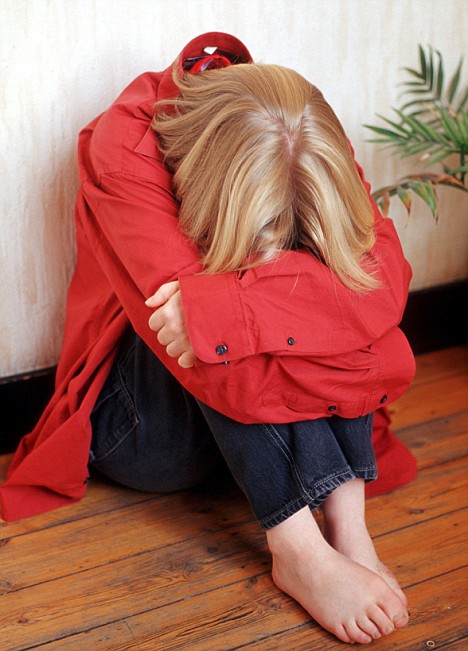
How to stop emotional abuse in marriage

Too many times in life, there is a friction between us and others, and a deep sense of frustration when our basic emotional needs are not being met.

However, sometimes we deal with a person who surprises us: when we are able to talk with them, express needs, and negotiate positive solutions, we are shocked and think to ourselves, “Why hasn’t this person told me this before? It would have been so easy to satisfy their request, if only I had known it!”

How does that exchange of needs and satisfaction begin? With assertion! Assertion is the art of saying what you need, believe, and deserve in a way that other people can hear you clearly.

This ability is essential for if you want to stop emotional abuse in marriage, and improve an abusive marriage. Unhealthy alternatives to assertion are:

1.    Submission – letting other people’s needs come always before yours, whether just or unjust. This happens if you accept disrespectful treatment from a loved one for some time, and breeds deep resentment;

2.    Aggression – forcing your needs on another person without their agreement.

Both are lose-lose options, meaning that both sides, even the “winning” one will get less from the relationship. These options build anger, hurt and resentment instead of respect and love.

The proper way to assert your needs and desires is this:

1.    Create a clear idea of exactly what behavior is irritating you, and why. If he/she is not speaking to you in front of your friends, that is clearly a hostile behavior that needs addressing. What is the behavior that you want, instead of this? Acceptance, care, attention? Be clear on what you want.

2.    You need to define the behavioral change that you need from this person or to set limits with someone whose behavior is unacceptable or hurtful to you.

3.    Don’t back down on your personal rights as a dignified person; stand firm in your belief that your rights, needs, and dignity are just as valid and important as anyone else’s, regardless of age, power, role, or gender.

How does assertion work?

1.    Begin describing the negative behavior in clear words:

“When you make jokes about my cooking in front of my friends, as you did last night at Alice’s party…

2.    State the impact on you:

“I feel put down and unappreciated.”

3.    Declare that you want a change and to agree to making the change:

“Remember that we are each other’s support system and we don’t criticize the other in public.”

If you want to stop emotional abuse in marriage in a healthy way, remember that your purpose is not to blame, but to deliver information about the impact of the behavior. Messages centered on the “I” pro noun, delivered calmly and with steady, non-apologetic eye contact have a better chance of being received as information, and not criticism.

The victim of emotional abuse needs to provide the offending person with a steady feedback on the impact of their behavior for two reasons. It is information necessary to change, and to building up self-esteem. Assertion greatly assists an emotionally abused woman, because it gives her the opportunity to express and defend her own needs in an unequivocal way. In this way, you deal with an emotional abuse marriage.

Nora Femenia, Ph.D is passionate about supporting women’s recovery from emotional abuse once and for all. Nora has created a powerful set of tools for helping women break out of the mind-set that keeps them in a toxic relationship by first discovering unconscious beliefs and family blueprints.

To know more about her latest book “Recovering From Emotionally Abusive Relationships” please visit http://www.healingemotionalabuse.com

How to Heal from Emotional Abuse

If you want to heal from emotional abuse, you may want to start with your childhood. Emotional abuse often has roots going all the way back to early development. Emotional abuse of children can result in serious emotional and behavioral problems, including depression, lack of attachment, low cognitive ability, and poor social skills – all things that affect adult life and especially adult relationships.

In studies, children who were emotionally abused were found to grow up angry and uncooperative, lacking in creativity, persistence, and enthusiasm.

Modeling is especially important here, because the child may either imitate violent behavior, or learn that being abused is normal. Once gained, these roles are very hard to unlearn, and set the tone and model of behavior for their adult relationships.

When put into action, angry and violent verbal abuse such as blaming, ridiculing, insulting, swearing, yelling and humiliation will have long-term negative effects on a woman’s self-esteem and contribute to feelings of uselessness, worthlessness and self-blame. Her reaction to and acceptance of abuse may have been learned when she was a child. It is important to recognize this behavior and learn how to reverse it.

Emotional abuse can have serious physical and psychological consequences for women, including severe depression, anxiety, persistent headaches, back and limb problems, and stomach problems.

In order to heal from emotional abuse we need to bear in mind the following:

  • Become aware of your situation, call abuse as abuse and stop accepting his “tough love”.
  • Recognize that change is earned – it will come only if you work for it. Nobody will rescue you against your will.
  • Research emotional abuse books and learn as much as you can.
  • Learn to recognize abusive relationships and how to avoid them, everywhere.
  • Begin building a support system by reaching out to community resources.
  • When in doubt, find your best resource: a professional advisor educated in abusive relationships.

• What does it take to heal from emotional abuse?

In order to live a happy and peaceful life, we need to learn ways to achieve and meet our needs and goals in an ethical and healthy manner; we need to receive sound affection, we need to be accepted and respected for who we are, we need to be able to meet our basic needs (material, emotional, spiritual, professional, etc.), we need to feel we can reach our goals in life successfully, and achieve every task we carry on (study, work, career, etc.) without feeling threatened by others.

Grown adults need to recognize and process childhood abuse in order to move forward and function in a normal, healthy relationship. In other words, it is hard to know where you’re going if you haven’t come to terms with where you’ve been.

Nora Femenia, PH.D is passionate about supporting women’s recovery from emotional abuse once and for all. Nora has created a powerful set of tools for helping women break out of the mind-set that keeps them in a toxic relationship by first discovering unconscious beliefs and family blueprints.

To know more about her latest book “Recovering From Emotionally Abusive Relationships” please visit   http://www.healingemotionalabuse.com

How to Stop Abuse Early On

stop abuse


One description of romantic love is that it is a bond two people share when they are joined in unconditional support and appreciation by the same wants and needs. Don’t we all secretly wish for this love?

It appears to be a fair contract: “I will love and accept you and you will do the same for me…” The assumption here is that they are two equals, who promise to commit their lives to each other in full freedom.

In the background however, there are some rumblings of discord. You can hear protests from the gender roles we grew up with; they contradict that equality clause. Who handles the finances? Who has more authority in choosing housing and location? Who assumes the power to make the final decisions?

In order to stop abuse, we must look at how it starts:

As a marriage progresses, what we see is the slow, painful drawing of battle lines. Is this marriage an equal partnership? Or is a traditional marriage, where husbands have the power and women obey? If this decision is arrived at by means of a healthy conversation, with both agreeing to have a traditional marriage, and both also agreeing to review this decision if need be, there is no cause for alarm. Unfortunately, when both parties are in love, they do not often make this conversation a priority. And when abuse starts, is difficult to stop abuse.

As letters from clients tell us, not making time for this conversation can lead to a slow, sneaky imposition of the husband’s control; often through emotional abuse.

How does a husband gain control over an unsuspecting wife?

“He tells you what to think and feel and when; then, if you obey, he will reward you with some crumbs of kindness. I was so starved of love and human connection that I would pounce on those crumbs of kindness and then crave my next crumb.”

 STOP ABUSE AS SOON AS IT STARTS!

Those bits of affection are very scarce; emotional abuse dishes out a lonely compliment among a feast of critiques, put downs, ironic negative comments and other controlling expressions.

Slowly this control battle takes over the relationship. The marriage is no longer a tool for reciprocal growth; it is a progressive dis-empowering of one partner, while the other accumulates the decision-making, money, resources and power.

What you end up with are two people who are utterly unhappy. Even when the controlling husband manages to delude himself that things are okay,the isolation, despair and depression of the abused wife can only be ignored for so long. If he is suddenly confronted with the total shock of his wife’s reality, stopping the emotional abuse is usually impossible. For her, healing from emotional abuse will take time, effort and a strong will.

Abuse and control are very real issues, difficult to address, and very damaging to any relationship. Education on issues of respect and parity in marriage can accomplish a lot in stopping emotional abuse, but only if we are willing to work on the side of prevention as well as recovery.

Nora Femenia, Ph.D is passionate about supporting women’s recovery fromemotional abuse once and for all. Nora has created a powerful set of tools for helping women break out of the mind-set that keeps them in a toxic relationship by first discovering unconscious beliefs and family blueprints.

To know more about her latest book “Recovering From Emotionally Abusive Relationships” please visit http://www.healingemotionalabuse.com

How to Recover from Emotional Abuse

Although there is no universally accepted definition of emotional abuse, it is largely based on the need to use power and control over the life partner or relative.

  • Emotional abuse follows a pattern; it is repeated and sustained. Left unchecked, abuse only gets worse over time.
  • Emotional abuse is a serious problem that continues to linger and effect much longer than desirable.
  • Continued emotional abuse can cause many victims to develop chronic anger and mistrust issues, which sometimes detach from the abuse and appear as different symptoms.
  • Like other forms of violence in relationships, the ones who are most often emotionally abused are also the ones who hold the least power in society, for example, women and children;
  • Emotional abuse can severely damage a person’s sense of self-worth and perception;
  • Emotional abuse can also affect a child’s social development and may result in an impaired ability to perceive, feel, understand and express emotions. In the future, this stunted development of the capacity to feel empathy could make of the former victim a new abuser of others, perpetuating the circle.

Usually, the victim thinks that to recover from emotional abuse, they have to make the abuser understand his/her point of view, believing that a misunderstanding is at the root of the problem. But there are deeper reasons for the emotional abuse, as well as elements intrinsic of the mindset of the abuser and pertaining to his model of a relationship.

The victim especially needs to understand that the abuser will only change if he/she decides to do so, and not just because the victim needs him/her to change.

To truly recover from emotional abuse, we must choose to stand for our rights and demand to be treated with the respect we deserve. Otherwise, we choose to accept an unhealthy relationship and agree to pay the price. One price is an imaginary sense of support from the abuser that is never reliable.

Often, it is not possible to find a solution because an abuser is not cooperating. Thus, it’s important to stop participating in an emotionally abusive relationship. This means letting go of the victim’s role and starting to work on personal issues and self esteem, in order to strengthen our interactions and relations with others. Without this, recovery from emotional abuse cannot start.

Some elements of this transformation are to:

  • Become aware. Acceptance of the situation is the very first step.
  • Avoid self-deception: give up the hope that he will change.
  • Learn as much as you can about emotional abuse.
  • Learn how to use assertive techniques when confronting.
  • Use community resources as help in planning a better future.
  • Seek help and share your case with others who can provide different solutions. Seek professional case whenever needed.

Ultimately, these will facilitate recovery from emotional abuse, while promoting your self-esteem and happiness.

Nora Femenia, Ph.D is passionate about supporting women’s recovery from emotional abuse once and for all. Nora has created a powerful set of tools for helping women break out of the mind-set that keeps them in a toxic relationship by first discovering unconscious beliefs and family blueprints. To know more about her latest book “Recovering From Emotionally Abusive Relationships” please visit http://www.healingemotionalabuse.com

The Quality of Your Life Depends on Your Positive Emotions